


 RSS Feed
 She Built a Peer Mentorship Program to End Youth Loneliness
We sit down with Esha Mittal and Dr. Todd May of Health Net to examine the gap between societal perception and the reality of teen loneliness.

 Apple Podcasts Apple Podcasts
  Spotify Spotify
  YouTube YouTube
  Amazon Music Amazon Music
  iHeartRadio iHeartRadio
  Pandora Pandora
  Goodpods Goodpods
  Castbox Castbox
  PlayerFM PlayerFM
  Podchaser Podchaser
  Audible Audible
  Podcast Addict Podcast Addict
  Deezer Deezer
  JioSaavn JioSaavn
  Youtube Music Youtube Music
  PocketCasts PocketCasts
 Key Takeaways
- According to the National Library of Medicine, one in three young people in the U.S. live with a chronic condition, facing higher rates of isolation and mood disorders.
- Traditional diagnosis-based support groups often fail youth, frequently devolving into spaces focused solely on illness rather than personal identity.
- Esha Mittal founded The Shared Strength Project in November 2025 to pair youth with chronic conditions based on shared interests rather than shared diagnoses.
- Payer boardrooms actively discuss youth mental health generally, but specific terms like youth loneliness have not yet entered mainstream payer conversations.
- UCSF's Wellness Center for Youth and Young Adults with Chronic Conditions provides a holistic care model that treats patients as whole people rather than just focusing on symptoms.
- Esha Mittal will speak on a panel about designing tools youth and young adults will actually use at the Behavioral Health Tech 2026 conference in Nashville.
Youth Loneliness & Chronic Conditions: The Shared Strength Project
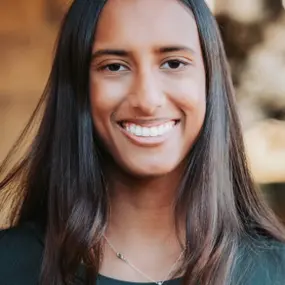
Guest: Esha Mittal, Founder, The Shared Strength Project
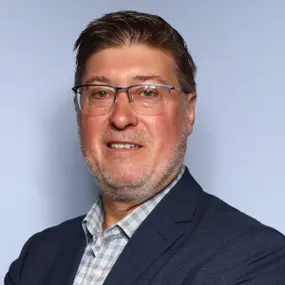
Expert Words: Todd May, MD, Vice President & Medical Director, Health Net
Host: Alex Yarijanian
Episode Summary
One in three young people in the U.S. live with a chronic condition, according to the National Library of Medicine — yet almost none of the funding, research, or attention going toward senior loneliness has followed youth loneliness into the room. Esha Mittal knows the gap firsthand. Diagnosed with a chronic condition in the fall of her freshman year of high school, she found that the diagnosis-based support groups meant to help her instead became what she calls "a pity party" — rooms where the illness was the only thing anyone had in common.
In November 2025, Esha launched The Shared Strength Project, a mentorship program that pairs youth and young adults living with chronic conditions with mentors matched by shared interest, not shared diagnosis. The model grew directly out of her own experience at UCSF's Wellness Center for Youth and Young Adults with Chronic Conditions, where a nurse practitioner and social worker treated her as a whole person before they ever discussed her symptoms — and where she met the mentor whose own story became the blueprint for the project.
In this episode, Esha walks through what that first isolating year actually felt like, why interest-based pairing works where diagnosis-based support groups didn't, and how a trauma-informed curriculum — built with a licensed social worker — structures every mentor meeting. We also hear from Todd May, MD, Vice President and Medical Director at Health Net, on why "youth loneliness" as a term hasn't yet made it into payer boardroom conversations — even as youth mental health broadly has.
Esha will be speaking at Behavioral Health Tech 2026 in Nashville (September 22–24, Gaylord Opryland Resort and Convention Center) on a panel about designing tools youth and young adults will actually use.
Timestamps
- 00:00 — Cold open: the funding gap between senior and youth loneliness
- 01:39 — Esha's diagnosis, freshman year of high school
- 03:24 — "They did not get it" — the friend-group disconnect
- 04:56 — Why the first (diagnosis-matched) support group made things worse, not better
- 07:20 — Launching The Shared Strength Project (November 2025) and the interest-based pairing model
- 09:19 — Todd May, MD (Health Net) on why youth loneliness hasn't reached payer conversations yet
- 10:33 — The UCSF Wellness Center partnership and the mentor whose story inspired the project
- 13:20 — Where to find Esha and what she's looking for next
- 13:54 — BHT2026 — Esha's panel on designing tools for youth and young adults
Key Quotes
Esha Mittal, on the diagnosis-matched support group:
"Once we started talking about our chronic condition, it felt like that was all we could talk about. And it just became like a pity party."
Esha Mittal, on the design principle behind The Shared Strength Project:
"I chose to pair people up based on shared interest because... it would have been so valuable for me to understand myself again outside of my illness."
Todd May, MD, on payer awareness of youth loneliness:
"That term hasn't actually come up... The loneliness piece is just not getting a lot of airplay."
Per the National Library of Medicine, as cited by Esha Mittal: one in three young people in the U.S. live with a chronic condition, and 20 million American children with serious or chronic conditions face a higher risk of isolation, bullying, and mood disorders.
Where to find Esha
Esha is currently reachable via LinkedIn and is building out a project website. She's looking for opportunities to scale The Shared Strength Project beyond California.
Upcoming
Catch Esha Mittal at Behavioral Health Tech 2026 — September 22–24, 2026, Gaylord Opryland Resort and Convention Center, Nashville, TN.
Value-Based Care Advisory Podcast | vbcapodcast.com
Companies mentioned in this episode:
- Shared Strengths Project
- UCSF Wellness Center for Youth and Young Adults with Chronic Conditions
- Behavioral Health Tech Conference
- National Library of Medicine
- Health Net
- Gaylord Opryland Resort & Convention Center
- Value Based Care Advisory podcast
Frequently Asked Questions
What is The Shared Strength Project?
The Shared Strength Project is a peer mentorship program launched by Esha Mittal in November 2025 that pairs youth and young adults living with chronic conditions based on shared interests rather than shared diagnoses.
Why do traditional diagnosis-based support groups sometimes fail youth?
Many young people find that diagnosis-based support groups become overly focused on illness, acting more like a negative pity party rather than offering a way to connect outside of their medical conditions.
How many young people live with a chronic condition in the U.S.?
According to the National Library of Medicine, one in three young people in the United States live with a chronic condition.
Where can people find Esha Mittal and her project?
Esha Mittal can currently be reached via LinkedIn, and she is working on building out a project website as she looks for opportunities to scale The Shared Strength Project beyond California.
00:00 - Untitled
00:12 - Loneliness Isn't Just a Senior Problem
01:42 - Back to the Diagnosis: Isha's Freshman Year Struggles
04:58 - When Support Groups Don't Fit — My First Experience
07:29 - Launching the Shared Strength Project: Mentoring Youth with Chronic Conditions
13:54 - Behavioral Health Tech (BHT) Conference — Nashville details and panel
Alex Yarijanian — 00:00:00
There is a teenager right now sitting alone at lunch because none of her friends understand what it's like to take 11 pills before noon. Nobody's building her a robot companion. Nobody's writing her a Medicare pilot.
We've decided as a system that loneliness is a senior problem. And it's sad when it happens to a 75-year-old. It's sad and invisible when it happens to a 15-year-old.
According to the National Library of Medicine, one in three young people in this country live with a chronic condition. Twenty million American kids are at higher risk of isolation, bullying, and mood disorders — because their peers don't get it, and the system isn't built to catch them.
Today I'm talking to someone who refused to accept that. She's not a health plan executive. She's not a policy wonk. She's the one living it, and she built the fix herself.
Esha Mittal is the founder of The Shared Strength Project, a peer mentorship program pairing youth with chronic conditions to mentors who've been there — mentors who've been there, and not based on their diagnosis. That's not the matching criteria. The criteria is lived experience.
She's partnered with UCSF's Wellness Center for Youth and Young Adults with Chronic Conditions. And she's a confirmed — not only confirmed, but much-anticipated — speaker at Behavioral Health Tech 2026. Last time I remember a highly anticipated speaker, it was Paris Hilton.
So, Esha, welcome to the Value-Based Care Advisory Podcast.
Esha Mittal — 00:01:39
Hi. Thank you so much. I'm so excited to be here.
Alex Yarijanian — 00:01:42
Esha, take me back to your diagnosis. What was that first year actually like? Take us back — not medically, but socially.
Esha Mittal — 00:01:53
So I was diagnosed in October of my freshman year of high school. I had not only just started at a brand new school — I had actually transferred schools about a month into the school year to accommodate for my new diagnosis and missing school. I moved to a place that would be able to accept those absences better. So I started a new school, and then I switched pretty immediately.
When I arrived at my new high school, I was already nervous because I came in a little later. But also, I didn't have the same opportunities to make friends with people around me, because during social times — like lunch, or early in the morning before school — I was often either at doctor's appointments or sleeping in to be able to attend the school day.
So the first semester of my freshman year, I really had a lot of bouncing around friend groups, trying to find the group that would work out for me and be able to understand that I wasn't always going to be at school, or present online to talk to them and hang out outside of school, because my chronic condition just didn't allow for that.
And often I would actually have experiences where I'd be at school, and I'd be so frustrated with my friends, because I would say stuff like, "Oh, I'm really tired and burnt out — I had a really crazy night of doctor's appointments and just being in terrible pain and not having a solution." And I would tell my friends this and try to explain it to them, and they would say stuff back to me like, "Oh, I'm so sorry — I had volleyball practice last night, I'm so tired too."
Alex Yarijanian — 00:03:24
Like, not getting it.
Esha Mittal — 00:03:26
They did not get it.
Alex Yarijanian — 00:03:27
Not getting it. And it's like — first of all, do you even get it? Not — you know — like, do you ask that?
Esha Mittal — 00:03:33
Yeah.
Alex Yarijanian — 00:03:34
For you to identify, let alone expect for others to get it — how did you come to even know that what's happening to you is different?
Esha Mittal — 00:03:43
I think for me — and it's different for everybody with a chronic condition, which is what I think makes it challenging — I had kind of always known something was not right, to put it simply. I had always known that I was always a little shorter than the other kids, or I couldn't eat the same things as other kids. So I had always known that.
And it was really, for me, the shift was more about being able to accept, "Okay, this is what I'm going to have to do differently now." I ended up going onto a gluten-free diet and having to start an infusion medication — so going every four weeks to an infusion center with my dad, for two-plus hours. So it was really those little life adjustments that were a big deal to me.
And it was particularly challenging because I didn't have someone stable in my life when I started at the new high school. These kids had only known me in my chronic-condition era, so it was hard for me to distinguish my personality outside of my illness with people I'd never met.
Alex Yarijanian — 00:04:50
What did the adults in the room think you needed, versus what you felt you might need?
Esha Mittal — 00:04:56
When I was first diagnosed, I was referred to a support group specifically for my chronic condition by my doctors. I was actually very excited about it, because I thought, "This is a great way to meet people who have been living with what I'm going to go through in the next six months and for the rest of my life."
What I found was, when I joined that first meeting, I actually found it much worse. I found it really hard to be around people who shared a diagnosis with me — most of them had been living with it since they were four years old, and this was a brand new experience for me. But not only that — once we started talking about our chronic condition, it felt like that was all we could talk about. It just became like a pity party, where I felt so weighed down by this thing.
Alex Yarijanian — 00:05:47
Was this the correct diagnosis support group, or was it the one before?
Esha Mittal — 00:05:52
It was before. At the time, I thought I had that as my diagnosis, so it didn't shift the mindset for me, because they were experiencing what I was experiencing. But in some ways, that just made it worse, because it felt like we were grouped together as this pity party, and there was nothing else we could talk about.
Alex Yarijanian — 00:06:11
Do you think that was more programmatic, or was it just logical for the pairing to happen based on diagnosis — so now this is the label you have, and to make sense of life, you're going to characterize yourself along with that? What are your thoughts about how the program might have been better?
Esha Mittal — 00:06:30
I think it's a little complicated. I think that for someone with something like cancer, it's different to have that kind of support group, actually, because in some ways it's a lot more temporary. Of course, it's a very tough experience to go through, and I'm not minimizing that at all — but it is a very different experience than what someone with a chronic illness is going through, and so the support needed is very different.
Also, I was referred to it by my doctor, and they actually do it within departments — so if you're being seen by a GI doctor, you're going to get grouped with a GI social worker, who's then going to refer you to that GI support group. Same thing for rheumatology, same thing for hematology.
Alex Yarijanian — 00:07:20
Esha, tell us about what you've been up to, and how you're addressing your experience — turning poison into medicine.
Esha Mittal — 00:07:28
Yeah. So in November of 2025, I launched The Shared Strength Project, which — as you said — is a mentorship program for youth and young adults with chronic conditions that reduces isolation through meaningful connection.
I chose to pair people up based on shared interest, because to me, when I was first diagnosed, it would have been so valuable to understand myself again outside of my illness. I think that's something a lot of newly diagnosed people really struggle with, because it's a pretty life-altering experience to have to add this piece to your identity.
So I started by reaching out to youth and young adults with chronic conditions across California, and then across the U.S. I interviewed them and their caregivers, and really tried to understand what they experienced day to day, and how their isolation affected their daily lives. Once I did that, I found this was a huge problem across everybody — from literally 30 years old all the way down to 8-year-olds were experiencing this sense of isolation and disconnect from their peers. And when I asked about these support groups, many people found the same thing I did — that it wasn't beneficial to them, because it just became a pity party.
So I designed this mentorship program with a social worker, who looked over the curriculum I created. Each meeting approaches things with a trauma-informed tone — walking through icebreakers and activities, "would you rather" and get-to-know-you questions — and always ends with a looking-ahead conversation about something they're excited about, looking forward to, or what they're going to take with them from the conversation.
Alex Yarijanian — 00:09:19
We're so inspired. Actually, the part that no one talks about is exactly youth loneliness. And I had a conversation with Dr. Todd May — he's a VP at Health Net — let's hear what he said.
[To Dr. May] First, let's talk about your take on youth loneliness, and whether that's been a conversation at the plan level at all — not any particular health plan, but generally, because your colleagues and the folks you interact with usually talk about what's on their minds, which is typically what's on the minds of the boardrooms. Have you heard anything about youth loneliness?
Todd May, MD — 00:09:56
You know, Alex, that term hasn't actually come up. Ever since the pandemic in particular, there's been a lot of discussion about youth mental health — it's a mental health crisis for the youth, and certainly the pandemic exacerbated everything. There's still a focus on mental health more broadly, and I think folks are mainly speaking of anxiety and depression as the major drivers. The loneliness piece is just not getting a lot of airplay. So — I find that interesting.
Alex Yarijanian — 00:10:33
Tell us about your UCSF Wellness partnership — I'm so excited to hear about that part.
Esha Mittal — 00:10:39
Yeah, I'm really excited about that. I was actually a patient at the Wellness Center when I was first discharged from the hospital in February of 2024, and it changed my life. It had an approach to care I'd never seen before — it did not feel like a doctor's appointment.
I went into the room and was greeted by a nurse practitioner and a social worker. Instead of asking me how I was feeling that day, or what my symptoms were, or going over blood work with me, they sat with me for an hour and talked to me about my goals, what I liked to do in my free time, and the art projects I'd been working on — because they knew I liked art, and they recommended things that just aligned. I felt like they got to know me as a person, and I've kept in touch with them. I'm still very close with them, because we built a very strong relationship — not just as patient and provider, but really as people.
They got to know me, and I got to know them, and they offered me a spot on their youth advisory council — which is how I found this community of people living with all kinds of chronic conditions, united by the purpose of the Wellness Center. We worked toward putting on community events and running panels. It became such a wonderful community, where I felt like I could really accept: "Okay, I have a chronic condition — and there are all these wonderful people I met because of it, doing amazing things despite having their condition."
One of those people was a social worker — she's now working as a social worker at a hospital in New York, and she lives with a chronic kidney condition. She really empathized with me and told me that when she was first diagnosed, she also had a lot of anger toward her friends for not understanding what she was going through. That's when I decided I wanted to create The Shared Strength Project — because I wanted to mimic that sense of community and belonging I felt in that space, for other people, by giving them a purpose through mentoring, and building a strong relationship with someone outside of just their illness.
Alex Yarijanian — 00:13:20
Wow — it sounds so logical, but no one has thought of it. Who knew? Where can people find you, and what do you need from us, anywhere in the world?
Esha Mittal — 00:13:35
I'm on LinkedIn, and I'm building a website right now — I do have a site. Really, what I'm looking for right now is just opportunities to scale this project. I'm right now just in California, and I would really like to get this to the people who need it.
Alex Yarijanian — 00:13:54
Tell us about BHT — you're going to be in Nashville. Esha, tell us what's going on, when, and how people can come and make sure they get a seat before it's standing room only.
Esha Mittal — 00:14:06
Yeah, I'm really excited. I'll be on a panel about designing tools that youth and young adults will actually use — which is important to me, not only as a teen, but also as I've tried to figure out how to make a virtual-tour school engaging. So very excited for that conversation — there's going to be so many great people on it.
Alex Yarijanian — 00:14:26
You can catch Esha at the Behavioral Health Tech Conference, in Nashville — I love Nashville. Nashville, Tennessee, September 22nd through the 24th of this year, 2026, at the Gaylord Opryland Resort and Convention Center. BHT 2026 is going to be doing something I haven't seen these other conferences do.
Thank you so much — I really appreciate your time.
Vice President Medical Director - Health Net
Dr. Todd May serves as Vice President Medical Director at Health Net where he provides clinical expertise for the Commercial Team. He is deeply engaged in quality improvement, population health management, health equity, advanced primary care, and implementation of innovative member engagement programs. He also provides key leadership in an innovative multi-payer initiative that promotes Advanced Primary Care in California, and another focused on improving hospital quality.
Immediately prior to joining Health Net, Dr. May was a Professor at UCSF for over 20 years. During this tenure, he served as Chief of the Medical Staff and then as Chief Medical Officer at the San Francisco General Hospital campus. He has been practicing family medicine for over 30 years and continues to see patients at a community clinic in Half Moon Bay.